
• Skip to primary navigation
  • Skip to main content
  • Skip to footer
RSVP

RSVP

The Research Society for Victorian Periodicals

  • Home
  • About
    • Join RSVP
    • Privacy Policy
  • Grants and Prizes
    • Award Calendar
    • Curran Fellowships
    • Linda H. Peterson Fellowship
    • Patrick Leary Field Development Grant
    • Colby Book Prize
    • Sally Mitchell Dissertation Prize
    • Rosemary VanArsdel Prize
    • VPR Expanding the Field Prize
    • Conference Travel Awards
  • Conference
    • Past Conferences
  • VPR
  • Resources
    • Teaching Materials
    • RSVP Digital Salon Resources
    • RSVP Bibliography
    • VanArsdel Bibliography
  • News & Events
  • Contact

VPR News

VPR/DNCJ promotion

April 30, 2018


RSVP is giving away copies of the Dictionary of Nineteenth Century Journalism (DNCJ) free to new and renewing subscribers to the Victorian Periodicals Review! (If you renewed recently, just add another year to your renewal and you’re good to go.) You don’t need to put in a promotion code, just sign up and this essential reference book will be mailed to you, while supplies last.
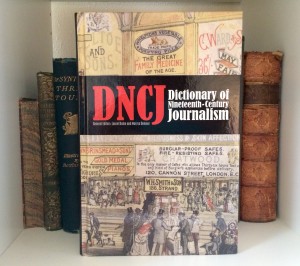
Click on this image to be taken to the VPR subscription page

These copies are already going fast, and there’s a limited number of them, so best to act quickly if you want a copy. And of course with your subscription (which only costs $35) comes membership in RSVP. It’s a win-win!

Filed Under: Graduate News, Members News, RSVP News, VPR News

CFP: Special Issue of Victorian Periodicals Review – Essays in Honor of Sally Mitchell

January 31, 2018

CFP: Special Issue of Victorian Periodicals Review 

Essays in Honor of Sally Mitchell

CFP-VPR Special Issue for Sally Mitchell[1] copy

Proposals due March 1, 2018

Completed Essays due September 1, 2018


Sally Mitchell (1937-2016) was a pioneering feminist scholar and teacher in the field of Victorian studies whose work opened new avenues for the study of women’s writing, cultural history, and journalism. Throughout her career, periodicals were at the heart of her research, which included groundbreaking work on women’s penny papers and popular reading, an innovative study of The New Girl, critical biographies of Dinah Mulock Craik and Frances Power Cobbe, indispensable histories such as Daily Life in Victorian England and Victorian Britain: An Encyclopedia, as well as edited editions and anthologies of Victorian women’s writing. To honor her contributions to our field and highlight her continued legacy in Victorian periodical studies, we plan to publish a special issue of VPR in Fall 2019.

Contributions to the special issue should be 5,000 to 9,000-word essays (including notes and bibliography) focused on any topic inspired by Sally Mitchell’s work on the periodical press. Essays might explore the Victorian press in relation to:

  • • Victorian women writers and women’s reading
  • • The “new girl” and girls’ culture
  • • Daily life and social history
  • • Popular fiction and literary history
  • • Feminist activism, networks, and mentoring
  • • New directions in biography
  • • New approaches to teaching with periodicals

Please submit a 200-word abstract and a CV by March 1, 2018 to guest editor Katherine Malone at katherine.malone@sdstate.edu.

 You can download a PDF version of the CFP here.

Completed essays will be due September 1, 2018.

Filed Under: Graduate News, RSVP News, Uncategorized, VPR News

Dr. Paul Fyfe wins Prestigious Donald Gray Prize

September 14, 2017

Congratulations to RSVP member Dr. Paul Fyfe winner of this year’s Donald Gray Prize for the best essay published in the field of Victorian studies.

Dr. Fyfe’s article ‘An Archaeology of Victorian Newspapers‘ was published in the Winter 2016 edition of Victorian Periodicals Review.

The NAVSA judging committee – Deborah Denenholz Morse (Chair), Mary Jean Corbett, Martin Danahay, and Peter Hoffenberg  – commented:

Paul Fyfe’s ‘An Archaeology of Victorian Newspapers’ excavates a portion of “the largely hidden history of how Victorian data gets to now” by filling in some of the gaps between then and now.  This fascinating essay, which draws on the methods of book history and media archaeology, as well as practicing a form of “investigative scholarly journalism,” explores the occluded material histories of one large-scale digitization project: the British Library’s massive collection of nineteenth-century newspapers.  He establishes its complex relations to a range of mid-twentieth-century agents, technologies, and institutions, from the preservation efforts undertaken in the aftermath of the second world war to the emergence of (and continuing role played by) microfilm in the collaboration between libraries, micropublishers, and the forerunners of the CIA. Victorian media became digital, Fyfe argues, both by subordinating the provinces to the metropole and by having the techno-labor of its production outsourced to India and Cambodia. In a timely investigation of what now constitute “the enabling conditions of our scholarship,” the essay charts a path forward for thinking about—and critically reflecting on—the digital tools we all use.


Filed Under: Conference News, Graduate News, Members News, RSVP News, VPR News

CFP: Special issue of Victorian Periodicals Review: The Strand Magazine

August 17, 2017

CFP: Special issue of Victorian Periodicals Review: The Strand Magazine

Described by Reginald Pound as a ‘national institution’, the Strand Magazine (1891–1950) was the foremost British New Journalistic fiction paper of the 1890s. This heavily illustrated monthly promised its readers ‘cheap, healthful literature’, including short and serial fiction, factual articles, human-interest features and celebrity items, by some of the best-known authors of the time. Yet, in spite of its popularity, the Strand has attracted limited scholarly attention and is often dismissed as a prime example of the Victorian middlebrow. This special issue of Victorian Periodicals Review seeks to elicit original essays assessing the nature, role and significance of the Strand in the period 1891–1918. Possible contributions might address, but are not limited to, topics such as:


  • The Strand and the short story
  • The Strand and genre fiction
  • The topical Strand
  • The Strand and popular science
  • The Strand and celebrity culture
  • The Strand and the New Journalism
  • The Strand’s editorial policies
  • The Strand and periodical design
  • The Strand and illustration
  • The Strand and its readers
  • The Strand and the middlebrow
  • The Strand and British identity
  • The Strand abroad
  • The Strand and the ‘Victorian’
  • The Strand and the modern
  • The Strand in the digital age


Please send a 300-word abstract and a one-page CV to our guest editors Emma Liggins (e.liggins@mmu.ac.uk) and Minna Vuohelainen (minna.vuohelainen@city.ac.uk) by 1 December, 2017. Final essays of 5000-9000 words (including notes and bibliography) will be due by 1 May, 2018 and should be prepared in MS Word according to the Chicago Manual of Style. The special issue will be published in summer 2019.

Filed Under: Graduate News, Members News, RSVP News, VPR News

CFP: Special Issue of Victorian Periodicals Review: The Material Culture of Victorian Domestic Life and the Press

August 9, 2017

The Material Culture of Victorian Domestic Life and the Press

The Victorian press actively shaped Victorians’ notions of domestic life around several topics: material culture, architecture, interior design, and the gendering of domestic space. In addition to the many studies of Victorian domestic life and coffee table books on Victorian interiors and furnishings are new readings of Victorian authors Isabella Beaton, Charles Eastlake, and Mary Eliza Haweis on domestic taste and furnishings, as well as a neo-Victorian fascination with Victorian design, food, cooking culture, and household management.

Despite this literature, there are many still-understudied areas that are addressed in the periodical press:

  • working-class domestic lives
  • rural home decoration and furnishing in relation to urban design and furnishings
  • the ways Britons recreated British domestic life in the colonies
  • the physical organization of domestic space
  • changes in laws, aesthetics, and gender and class relations (e. g., the 1882 Married Women’s Property Act, the 1870 Education Act, Aestheticism, the department store, the New Woman) that introduced new objects, designs, family relations, gender roles and spatial structures in homes
  • advertising and illustrations of furnishings and the material page

This list is not meant to restrict, but to suggest topics. This CFP seeks to elicit essays on the press’s role in the production of domestic life as an ideal and a set of practices, including across class and the geography of Britain and the colonies. We encourage authors to address the texture of conflicting views on how to conduct and represent domestic life within individual periodicals and across periodicals that contained different ideologies, intentions and readerships in a range of periodicals—the women’s press, architecture journals, general periodicals, the art press and other specialized or trade periodicals.

Please submit a 300-word abstract outlining your proposed contribution and a CV by September 15, 2017 to our guest editor Julie Codell at: Julie.codell@asu.edu Final drafts of essays selected for inclusion in the special issue will be due January 5, 2018. These essays should be 5,000-9,000 words in length (including notes and bibliography) and formatted in Chicago style.

Filed Under: Members News, RSVP News, VPR News

Call for Papers – Special Issue of Victorian Periodicals Review: “The Material Culture of Victorian Domestic Life and the Press”

October 30, 2016

Guest Editor, Julie Codell

The Victorian press actively shaped Victorians’ notions of domestic life around several topics: material culture, architecture, interior design, and the gendering of domestic space. Deborah Cohen’s Household Gods (2009) and Thad Logan’s The Victorian Parlour (2006) both articulate a critical analysis of Victorian domestic life joined with material culture studies to go beyond the stereotypes of cluttered rooms and gendered “separate” spaces. Recently Jane Hamlett’s Material Relations (2010) continues the exploration of how people lived at home through a study of their material goods. Scholars such as John Potvin have explored interior design in relation to orientalism, sexual orientation, and modernity in a flood of now well-established material culture studies sparked by Daniel Miller, Judith Attfield, and others. In addition to the many coffee table books on Victorian interiors and furnishings are new readings of Victorian authors Isabella Beeton, Charles Eastlake, and Mary Eliza Haweis on domestic taste and furnishings, as well as a neo-Victorian fascination with Victorian design, food, cooking culture, and household management.

Despite this literature, there are still many understudied areas in the periodical press:

  • working-class domestic lives,
  • rural home decoration and furnishing in relation to urban design and furnishings,
  • the ways Britons recreated British domestic life in the colonies,
  • prescriptions of family roles,
  • the home as both private and public,
  • the changing role of the manor house in the development of national cultural identity,
  • the physical organization of domestic space,
  • changes in laws, aesthetics, and gender and class relations (e.g., the 1882 Married Women’s Property Act, the 1870 Education Act, Aestheticism, the department store, the New Woman) that introduced new objects, designs, family relations, gender roles and spatial structures in the home,
  • advertising and illustrations of furnishings and the material page.

This list is not meant to restrict but to suggest topics. This CFP seeks to elicit essays on the press’s role in the production of domestic life as an ideal and a set of practices functioning across class and the geography of Britain and the colonies. We encourage authors to address the texture of conflicting views on how to conduct and represent domestic life within individual periodicals and across periodicals that contained different ideologies, intentions, and readerships. We welcome proposals on the structures and spaces of domestic life examined and prescribed in a range of periodicals—the women’s press, architecture journals, general periodicals, the art press and other specialized or trade periodicals.

Please submit a 300-word abstract outlining your proposed contribution by December 1, 2016, to julie.codell@asu.edu. Final drafts of essays selected for inclusion in the special issue will be due July 1, 2017. These essays should be 5,000–9,000 words in length (including notes and bibliography) and should be formatted in Chicago style.

Filed Under: Graduate News, Members News, RSVP News, VPR News

  • « Go to Previous Page
  • Page 1
  • Page 2
  • Page 3
  • Go to Next Page »

Footer

Search Our Site

Visit Our Blog

Connect with Us

  • Facebook
  • Twitter
  • YouTube

Copyright © 2026 · Genesis Sample on Genesis Framework · WordPress · Log in