• Skip to primary navigation
  • Skip to main content
  • Skip to footer
RSVP

RSVP

The Research Society for Victorian Periodicals

  • Home
  • About
    • Join RSVP
    • Privacy Policy
  • Grants and Prizes
    • Award Calendar
    • Curran Fellowships
    • Linda H. Peterson Fellowship
    • Patrick Leary Field Development Grant
    • Colby Book Prize
    • Sally Mitchell Dissertation Prize
    • Rosemary VanArsdel Prize
    • VPR Expanding the Field Prize
    • Conference Travel Awards
  • Conference
    • Past Conferences
  • VPR
  • Resources
    • Teaching Materials
    • RSVP Digital Salon Resources
    • RSVP Bibliography
    • VanArsdel Bibliography
  • News & Events
  • Contact

RSVP Digital Events

December Workshop: Framing the Syrian Monument of Xi’an in The Chinese Repository (1832-1851)

November 18, 2021

The RSVP Race and Transimperialism Workshop Series presents:

Framing the Syrian Monument of Xi’an in The Chinese Repository (1832-1851): American Beatitudes of Commercial Christendom, from the Foundation to Destruction of the Canton Mission Press
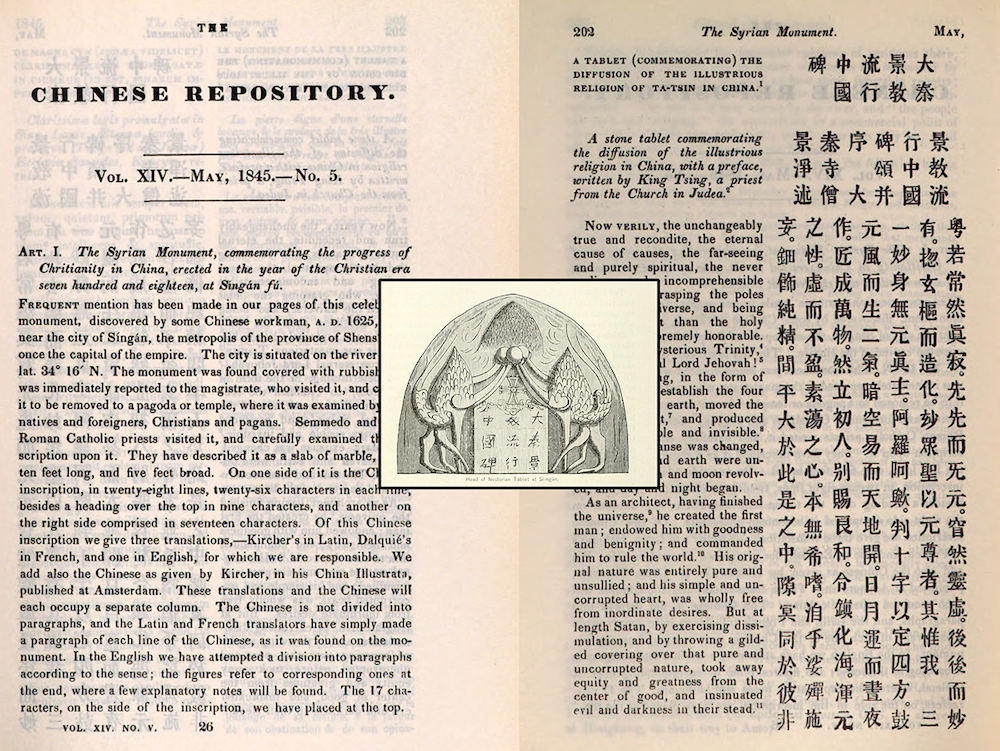
Two-page spread of the Chinese Repository, volume 14, issue number 5, for May 1845

Dr. Kendall A. Johnson (University of Hong Kong)
Thursday, 16 December 2021, 4 p.m. GMT / 10 a.m. CST

This fourth workshop in our series will focus on the materiality of periodical production in the anglophone missionary press in Canton (Guangzhou). The first American missionaries to China were keen to use metallic fonts in printing the Chinese language. To appreciate why metallic fonts mattered, this talk considers how the The Chinese Repository (1832-1851) juxtaposed articles on China’s deep history while reporting on turbulent news of the present. 

The 50-minute workshop will include Q&A, with time for discussion and suggestions for further reading. The workshop is free. All are welcome. Please register here to receive the Zoom link for this free online workshop.

The Chinese Repository in Context

The editors Elijah C. Bridgman and S. Wells Williams printed the monthly periodical for two decades, through the First Opium War and Taiping Rebellion. Reports of opium smuggling and debates over “free trade” appeared next to scholarly surveys of dynastic succession and descriptions of regional customs, trade, government, and religion. Over the years, they were proud that Chinese script, pressed from metallic fonts, appeared with increasing frequency across all the articles. In 1845 Bridgman showcased this ability by looking back across a literal millennium to publish his new annotated translation of engravings from the “Syrian Monument,” a stone tablet of the 8th-century uncovered near Xi’an in 1625 CE (widely known as the Nestorian Stele). Bridgman’s print-cultural framing of this monument implies his aspirations as an American Protestant missionary in the global historical scale of Christendom. Just as insightful are the compounded failures that ensued, including the destruction of the Canton Mission Press on December 14, 1856 at the start of the Second Opium War and the waning support of it by church-goers, ministers, and merchants back in the United States. 

Today The Chinese Repository offers much more than a first-hand record of events. The antiquarian research in its pages recalls an American brand of commercial Christendom that fixed attention on China’s ancient past while rationalizing gunboat diplomacy in the present, all the while investing faith in future powers of print technology to redeem China.

About Our Speaker

Dr. Kendall A. Johnson is Professor of Literature in the School of English at the University of Hong Kong where he researches material print culture in a transnational and global historical frame. His most recent single‐authored book is The New Middle Kingdom: China and the Early American Romance of Free Trade (Johns Hopkins University Press 2017). Other publications include Henry James and the Visual (Cambridge University Press 2007; 2011), Oceanic Archives, Indigenous Epistemologies, and Transpacific American Studies (Hong Kong University Press 2019, with O. Heim and Y. Shu); Narratives of Free Trade in Early US-China Relations (Hong Kong University Press 2010; contributing editor), and The Critical Companion to Henry James (FactsOnFile 2009, with E.L. Haralson). The Oxford Handbook of Twentieth-Century American Literature (edited by L. Bow and R. Castronovo) includes his chapter on opium consumption in the autobiographical writings of Emily Hahn and George Santayana. His work has appeared in American Literary History (ALH), American Literature, American Quarterly, The Columbia Guide to Native American Literature of the United States: 1945-Present (2006; edited by E. Cheyfitz), Modern Fiction Studies, and elsewhere.

Participation in this workshop does not require RSVP membership; all are welcome. For any other queries, please email us and direct your inquiry to our Vice President, Fionnuala Dillane.

Filed Under: RSVP Digital Events

Settler Colonialism and the Slave Trade: Our November Transimperialism Workshop

October 15, 2021

The RSVP Race and Transimperialism Workshop Series presents:

Settler Colonialism and the Slave Trade:
Exploring Henry and Mary Bibb’s Voice of the Fugitive (1851-1853) and Mary Ann Shadd Cary’s The Provincial Freeman (1853-1857)

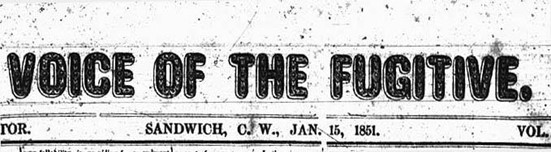
The Provincial Freeman masthead Voice of the Fugitive masthead

Dr. Fariha Shaikh (University of Birmingham)
Wednesday 17 November 2021, 6pm GMT / 12 pm CST

This third workshop in our series will focus on two mid-century Canadian periodicals: the first Black-owned periodical, Henry and Mary Bibb’s Voice of the Fugitive (1851-1853) and the first Black periodical to be owned by a woman, Mary Ann Shadd Cary’s The Provincial Freeman (1853-1857). Dr. Shaikh will situate these periodicals within the context of the periodical market place in mid-century Canada, and its status as a settler colony. She will attend to the periodicals’ contribution to the ‘Anglophone world’ (to use James Belich’s phrase): the ways in which they mediate questions of free and unfree labour and migration, and how they provide significant case studies for exploring the intersections between settler colonialism and slavery.

The 50-minute workshop will include Q&A, with time for discussion and suggestions for further reading. The workshop is free. All are welcome. Please register here to receive the Zoom link for this free online workshop.

About Our Speaker

Dr. Fariha Shaikh is Senior Lecturer in Victorian Literature at the University of Birmingham. She is the author of Nineteenth-Century Settler Emigration in British Literature and Art (Edinburgh University Press, 2018). She has an interest in the relationship between periodicals and settler colonialism, and has articles and chapters related to this in English Studies in South Africa, Worlding the South (Manchester University Press, 2021) and forthcoming work in Interventions. She is a New Generation Thinker 2021.

Participation does not require RSVP membership; all are welcome. For any other queries, please email us and direct your inquiry to our Vice President, Fionnuala Dillane.

Filed Under: RSVP Digital Events, RSVP News

Workshop: The Making of Transimperial Technological Networks

September 22, 2021

Logo of Bahishkrit Bharat, a Marathi periodical. The logo features the text of the journal title flanked by two lions in chains atop a banner.

Join us on 21 October 2021 at 5:30 pm BST / 11:30 am CST for a workshop titled, The Making of Transimperial Technological Networks: A Case Study of Select Marathi Periodicals.

This event is the second in our series on Race and Transimperialism. Dr. Vaibhav Singh (University of Reading) will introduce us to Marathi periodicals to discuss aspects of design processes, typographic history, printing and textual communications in the context of transimperial technological networks. The 50-minute workshop will include a presentation from Dr. Singh and Q&A, with time for discussion and suggestions for further reading. The workshop is free. All are welcome. See below for registration information.

Dr. Vaibhav Singh is a postdoctoral researcher at the Department of Typography & Graphic Communication, University of Reading, where he recently completed a 3-year British Academy Postdoctoral Fellowship. His project, “Merchants of alphabets: networks of typographic design and technology in Indian language publishing, 1900–1950” addresses the impact of typographic design and technology on the linguistic diversity of Indian publishing in the decades leading up to the country’s independence. It situates typographic design – a critically under-researched area in publishing and book history – within the intellectual frameworks of nationalism, mass communication, and technological modernity. Dr Singh is the recipient of an RSVP Curran Award in 2021.

His recent publications include:

Singh, V. (2018) The first Indian-script typeface on the Monotype: a missing chapter in the history of mechanical typecasting. Journal of the Printing Historical Society, 29.

Singh, V. (2018) The machine in the colony: technology, politics, and the typography of Devanagari in the early years of mechanization. Philological Encounters, 3 (4).

Register Now

Register here for this free online event. RSVP membership is not mandatory to attend. Event enquiries can be submitted to the Vice President via our contact form.

Filed Under: RSVP Digital Events, RSVP News

Your How-To Guide to Our 2021 Virtual Conference

September 6, 2021

How-To Guide Contents:
Registration
Viewing presentations
Zoom links
Session format
Chairing instructions
Zoom tech assistance instructions


How does this virtual conference work?

The conference will hold virtual sessions via Zoom, from 8-11 September, at the times indicated on the conference schedule. Attendees can view, listen to, and read presenter materials in advance of the regular sessions on the conference website. The regular sessions themselves will be primarily devoted to discussion among presenters and attendees. Keynote talks will also take place over Zoom, but there are no advance materials for these events.

The Zoom link for each session is posted to the password-protected page for that session on the conference website (see below for more information). There is no need to register for individual sessions ahead of time.

Please review the schedule as posted on the conference website to plan your participation, as some changes have been made in recent weeks.

How do I register for the conference?

Select the Registration tab of the conference website; simply enter your name and email address and hit submit. You will receive an automated email notification that includes the password to access all password-protected areas of the website. Please note that this message will not include the links to the Zoom sessions. See the next question for information about Zoom session links.

Where can I view the schedule
and the presentation materials themselves?

Visit the tab for each day of the conference (Day 1, Day 2, Day 3, Day 4) for the daily schedule of presentations. Click on the title of a panel to be taken to the presentations (videos, podcasts, papers) themselves. Registrants will be prompted to enter a password. This password will have been sent to you automatically upon registration. If you have not received it or cannot find it, please contact RSVP’s Communications Coordinator, Alison Hedley.

Please view, listen to, and read presenter materials in advance of the session; presenters will not be giving full papers during the session, but will give a brief overview followed by Q&A discussion.

How do I access the session “room” on Zoom?

The link the Zoom room for each panel or event appears at the top of the password-protected page for this panel. Please note that there are different rooms/Zoom links for every event. When you click on the Zoom link at the beginning of the event, you will be directed to a Zoom waiting room; one of the session hosts (the chair or the tech assistant) will let you into the meeting.

We recommend having the most recent version of Zoom downloaded on your computer to limit technical hiccups.

For information on Zoom use and troubleshooting, please see Zoom’s video tutorials; to quickly find the answer to a specific question, use the search function of the Zoom Help Center.

What is the format of regular sessions?

Please review the schedule as posted on the conference website in case any changes have been made to a panel.

The sessions themselves are structured to facilitate engaging discussion. To listen to the full version of each paper, participants can access presenters’ materials in advance on the conference website (see above). Sessions will take the following format:

– The chair will introduce the speakers, their bios, and conference presentation titles
– Speakers will give a recap of their presentation in 5 minutes or less
– The chair will then open the floor to Q&A from audience members
– The panel will be 60 minutes in total

How do I chair the panel I’ve volunteered for?

Thank you for agreeing to chair a panel! Please be sure to read/view/listen to the presentations in your session in advance. If you have not already done so, email your session panelists to solicit brief biographical statements. You should have received an email from RSVP’s Communications Coordinator with information about how to contact panelists; please refer to this email or contact Alison Hedley.

Please review the schedule as posted on the conference website in case any changes have been made to your panel.  Plan to arrive at your session 15 minutes early so that one of the conference’s local organizers can make you a co-host of the Zoom room. This will give you essential administrative privileges, such as the abilities to enable screen sharing and adjust room settings if/as needed. Please see above for the format of regular sessions. Your role involves introducing panelists and sharing or reading their bios; moderating discussion, and keeping the session to time.

OPTIONAL: If you wish, you can copy and paste panelist bios into Zoom’s chat function rather than reading each statement aloud prior to each paper brief. If the session has many presenters, this option has the benefit of opening a bit more time for discussion. If your panel chooses this option, please let attendees know to look for presenter bios in the Zoom chat window.

Wherever possible, another RSVP member has volunteered to serve as a tech assistant/backup in your session in case of any problems with Zoom. Their duties are listed below. If you do not have tech backup and you run into Zoom tech issues: you may find your solution on the Zoom Help Center; otherwise, send a text message to +1 215-629-6773, clearly stating the session for which you require support.

How do I offer the Zoom assistance I have signed up for?

Thank you for offering Zoom assistance for a session! Please arrive 5-10 minutes early for the session so that a local organizer or the panel chair can make you a co-host.

Your role involves the following tasks:

– managing attendee questions that are posed in the chat function (jumping into discussion if/when appropriate to articulate these questions)
– adding any appropriate links in the session chat as needed (such as the link to the session webpage on the conference website)
– taking over for the chair if their wifi cuts out;
– any other tech troubleshooting you might be able to offer if needed (perhaps with assistance from the Zoom Help Center). For any major technical difficulties, please send a text message to +1 215-629-6773, clearly stating the session for which you require support.

Filed Under: Conference News, RSVP Digital Events, RSVP News

Join Our Last #RSVPDigitalSalon of the Spring

May 4, 2021

How can I keep up with my research if I pursue an “alt-ac” career?

How would I do research without access to my institution’s library databases and subscriptions?

Where can I find like-minded scholars who share my interests if I’m not pursuing higher education as a career?

What does it look like to work with non-academic publishers? 

In short, what does it take to be an “independent” scholar? 

In the wake of Covid-19’s impact, many have asked the above questions as they face a future where academic austerity threatens to become the “new normal.” While not all scholars seek academic positions, those who do often wonder what it takes to continue producing rigorous and satisfying research apart from the university setting.

RSVP has long supported independent researchers of all kinds whose interests intersect with the wide world and long history of Victorian periodicals. Join us on 21 May at 6 p.m. UK / 1 p.m. EST for our last RSVP Digital Salon of the spring on “Doing Research as an Independent Scholar.”

Register for this event here. Registration is free and open to the public. You do not need to be a member of RSVP to attend.

Get Your Questions About Independent Scholarship Answered

During this more informal Q&A session, our panelists will answer your questions live and offer their insights on how to do research when one is not affiliated with a university. Our panelists include: 

Judith Flanders

Judith Flanders is a journalist and highly acclaimed author of both fiction and non-fiction. In addition to her Sam Clair Mysteries series, she writes regularly about history, theatre, dance, and the contemporary arts for the Sunday Telegraph, Wall Street Journal, Spectator, TLS, and theartsdesk.com. Her most recent non-fiction book, A Place for Everything: The Curious History of Alphabetical Order (2020), traces the history of using alphabetical order as a sorting system.

Helen Rappaport

Helen Rappaport is an international best-selling author, media consultant, and freelance historian who specialises in the period 1837-1918 in Britain and Russia. Her forthcoming books include a history of Russian emigration to Paris after the revolution in the US and a biography of Mary Seacole in the UK, both due out Spring 2022.

Marie Léger-St-Jean

Marie Léger-St-Jean is an independent scholar and digital humanist based in Montréal, where she edits Price One Penny: A Database of Cheap Literature, 1837-1860. Her research focuses on early Victorian fiction published in penny weekly numbers and its role as a nexus in a Western transmedia popular culture.

Patrick Leary

Patrick Leary is a former president and long-time member of RSVP. He is the founder/manager of the VICTORIA listserv, and he curates the Victoria Research Web, a treasure trove of Victorian research resources old and new. He also is the author of The Punch Brotherhood (2010), a prize-winning study of how oral culture shaped this iconic Victorian periodical.

Register and Submit Your Questions Now

Registration for this free event is open to all. You need not be a member of RSVP to attend and participate. And we highly encourage audience participation for this event! Our panelists are here to answer your questions about being an independent scholar. 

If desired, you can submit a question ahead of time. We will share your questions with the panelists in advance. We hope to see you there!

General questions about this or future Digital Salon events may be directed to our Vice President, Fionnuala Dillane.

Filed Under: RSVP Digital Events, RSVP News

Race and Trans-imperialism Workshop

April 20, 2021

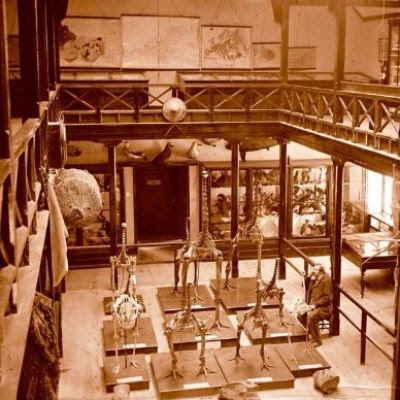
One landscape format black and white glass plate negative depicting Johann Franz Julius von Haast seated by moa skeletons at the Canterbury Museum.
Fig. 1. Glass Plate Negative: Johann Franz Julius von Haast at the Canterbury Museum.

Join us on 10 May 2021 at 6 pm UK / 12 pm CT for the first in a series of RSVP workshops on race and trans-imperialism, titled, Returning Citation: The Journal of the Polynesian Society, Natural Science and Indigenous Agents.

In this one-hour workshop, Dr. Megan Kuster will talk through questions about Indigenous contributorship raised by the Journal of the Polynesian Society. She will also outline how she has been drawing on Indigenous Studies methods to recontextualise the absent presences of Indigenous knowledge brokers. 20 to 30 minutes of discussion and suggestions for further reading will follow her 30-min presentation.

Megan Kuster is a European Research Council Postdoctoral Research Fellow on the SouthHem project, in the School of English, Drama and Film at University College Dublin in Ireland (see https://www.ucd.ie/southhem/). Megan’s current project focuses on the environment, capital and labour in colonial New Zealand. An article on this research is forthcoming in the Journal of Colonialism and Colonial History (July 2021). Her presentation for RSVP’s workshop series on race and trans-imperialism is part of a new article she is preparing on Moa bones, Indigenous labour and extinction discourse.

Register Now

Register here for this free online event. RSVP membership is not mandatory to attend. Event enquiries can be submitted to the Vice President via our contact form.

Filed Under: RSVP Digital Events, RSVP News

  • « Go to Previous Page
  • Page 1
  • Page 2
  • Page 3
  • Page 4
  • Page 5
  • Go to Next Page »

Footer

Search Our Site

Visit Our Blog

Connect with Us

  • Facebook
  • Twitter
  • YouTube

Copyright © 2026 · Genesis Sample on Genesis Framework · WordPress · Log in